Open-source POS comparison and buyer scorecard
Best open-source POS software: choose by operating model and proof
Compare five open-source POS operating models, then test each candidate with the same sale, outage, stock, hardware, restore and exit controls.
No product is a universal winner. The page links every competitor statement to official sources and shows exactly what Posnic has proved, plus what remains unproved.
Method and evidence boundary
Reviewed 22 August 2026. Product-model facts below come from each project's official documentation, source or release channel. Current Posnic downloads point to v1.9.0 and source commit 567a176b665bc9bbe4e14e72497b39e09bceda25; reproduced Posnic evidence remains pinned to an archived evidence run and archived source snapshot.
The comparison pins OSPOS release tag 3.4.1 and Floreant source snapshot 6cf73ad8eaedd94400ba4bdff0a7f7cc98bf5356, uses Odoo 19 documentation and records the official uniCenta community source route. Project releases and support routes can change, so recheck the exact selected package before a pilot.
The current project watchlist separately records FloCafe, Olgax POS and RetailPOS. Their newer public repository histories are useful for discovery but are not evidence of production maturity.
Posnic reproduced only its own runtime and source tests. It did not install OSPOS, Odoo, uniCenta or Floreant in this review, and it does not assign them a winner score. Official sources define the shortlist; the buyer's controlled pilot decides the result.
Five open-source POS operating models
The products overlap in category words but place the database, browser, till, hardware bridge and maintenance burden in different places.
| Project | Architecture and license boundary | First question to answer |
|---|---|---|
| Posnic | Desktop application with a database and API on the till; optional Posnic Cloud is separate. Public source is AGPL-3.0-only. Source | Do you want a local desktop runtime, and can your team accept AGPL duties plus the current installer and hardware limitations? |
| Open Source Point of Sale (OSPOS) | Release 3.4.1 documents PHP 8.1 to 8.4 with MySQL 5.7 or MariaDB 10.x on a web server, with a Docker path whose basic setup is not presented as production-ready. The OSPOS 3.4.1 license file starts with MIT terms and adds visible-footer and ownership conditions. | Who owns the web and database stack, production hostname configuration, patching, backup and recovery, and what happens to each till when the host or LAN is unavailable? |
| Odoo POS | Browser POS inside a broader ERP. Odoo 19 documents temporary-outage behavior and several hardware routes. Community is LGPLv3; Enterprise and some apps have separate terms. Licenses | Are the required POS, accounting, hardware and support capabilities in the chosen edition, hosting model and country configuration? |
| uniCenta oPOS | Java-based desktop and multi-terminal model for retail and hospitality. The official site and SourceForge expose community source archives; current supported downloads and access terms can differ from that archive. Official source archive | Which exact release and source package will be maintained, and which database, devices, plugins and support path does the rollout depend on? |
| Floreant POS | Java multi-terminal model focused on restaurants, with Derby, MySQL/MariaDB or PostgreSQL paths. The pinned default-branch license file states MRPL 1.2, based on MPL 1.1 with a permitted attribution clause. | Does the restaurant workflow fit, and has counsel reviewed the exact license plus the source, plugin, update and support provenance for the selected build? |
License summaries are navigation, not legal advice. Read the exact license and dependency notices for the selected version before distribution, modification or hosted use.
Use the same 12 controls for every shortlist product
| Control | Pass condition | Evidence to retain |
|---|---|---|
| 1. Source and license | The published source matches the build under test, and the intended use, modification, hosting and distribution model has an accepted license position. | Repository URL, commit, license files, dependency notices and legal decision. |
| 2. Release integrity | A stable version, platform, checksum, signer status and upgrade path can be identified before installation. | Installer hash, release page, signature result and rollback package. |
| 3. First sale | Ordinary staff can install or open the till, create representative items, take payment and retrieve the stored sale. | Elapsed time, blockers, sale record and receipt. |
| 4. Outage | During the exact internet, LAN or host failure relevant to the architecture, approved sale and close tasks behave as documented and recover without duplicates. | Failure injected, tasks completed, queues, errors and reconciliation. |
| 5. Return and permissions | A cashier cannot bypass owner-only void, refund, price, tax or close controls; every approved exception leaves an audit trail. | Role matrix, denied actions and accepted return or void records. |
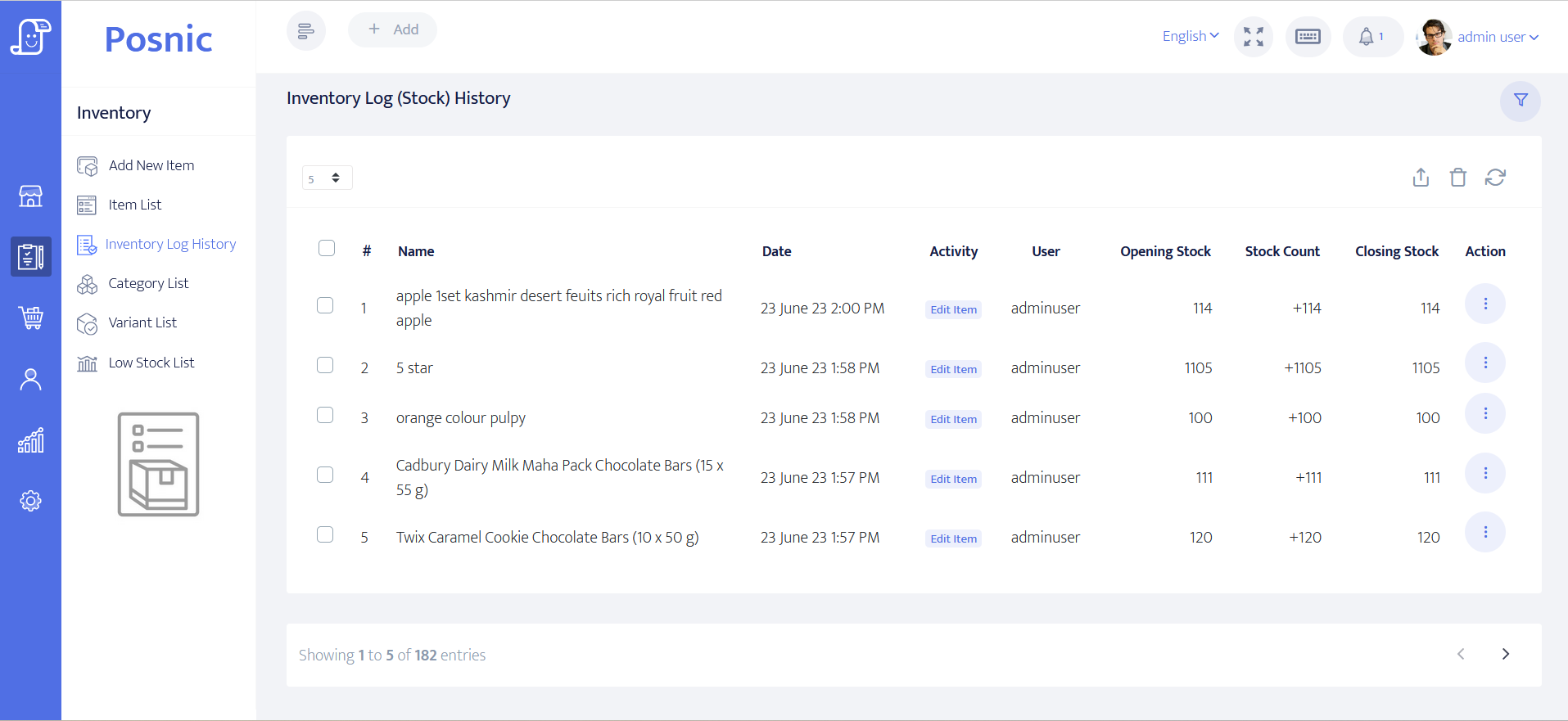
| 6. Inventory trail | Purchase, sale, return, waste, transfer and correction create explainable movements and a reproducible counted balance. | Opening stock, transactions, count variance and movement history. |
| 7. Hardware | The exact printer, scanner, drawer, scale, display and operating-system build needed at the site survive repeated use and reconnects. | Model, firmware, driver, connection, test count and failures. |
| 8. Payment and fiscal | The real payment and country-specific invoice or fiscal path is accepted by the responsible provider or adviser, including outage and duplicate handling. | Provider approval, test references, invoice samples and fallback procedure. |
| 9. Backup and restore | A separate clean environment can restore the required data and configuration within the business recovery objective. | Backup hash, off-device copy, restore duration and post-restore checks. |
| 10. Data exit | Items, customers, stock, sales and adjustments can be exported in usable, documented formats without an undisclosed paid dependency. | Export files, field map, row totals and import trial into a neutral tool. |
| 11. Updates and security | A named owner can receive advisories, test updates, preserve data, rotate secrets, patch dependencies and roll back safely. | Security policy, supported versions, update rehearsal and incident contacts. |
| 12. Support ownership | The business knows who responds to cashier, hardware, hosting, data, payment and tax failures, with written scope and escalation. | Responsibility matrix, service boundary, contacts and acceptance sign-off. |
What open source changes, and what it does not
Inspectability
Source access lets a capable team inspect behavior, reproduce a build and propose a fix. It does not prove that anyone reviewed the path relevant to your counter.
Control and responsibility
Self-hosting and local data can reduce provider dependency. They also make updates, secrets, backups, recovery and monitoring somebody's named job.
License duties
Open-source licenses grant rights with conditions. Copyleft, attribution, network use, plugins, trademarks and bundled dependencies need version-specific review.
Operating cost
A zero-price package can still require hardware, hosting, setup, migration, training, support, compliance and downtime budget.
Security
Public code can improve review and collaboration, but visibility is not an audit. Supported versions, advisories, deployment controls and response ownership still matter.
Exit
Source access helps only if the business also retains usable data, documentation, credentials, build knowledge and a tested route away from the current deployment.
What Archived Posnic evidence proves today
| Area | Pinned evidence | Do not infer |
|---|---|---|
| Source and release | Public AGPL-3.0-only source, archived tagged installers, sizes and SHA-256 checksums. Release details | A public repository alone does not prove the installer was independently audited or accepted for one business. |
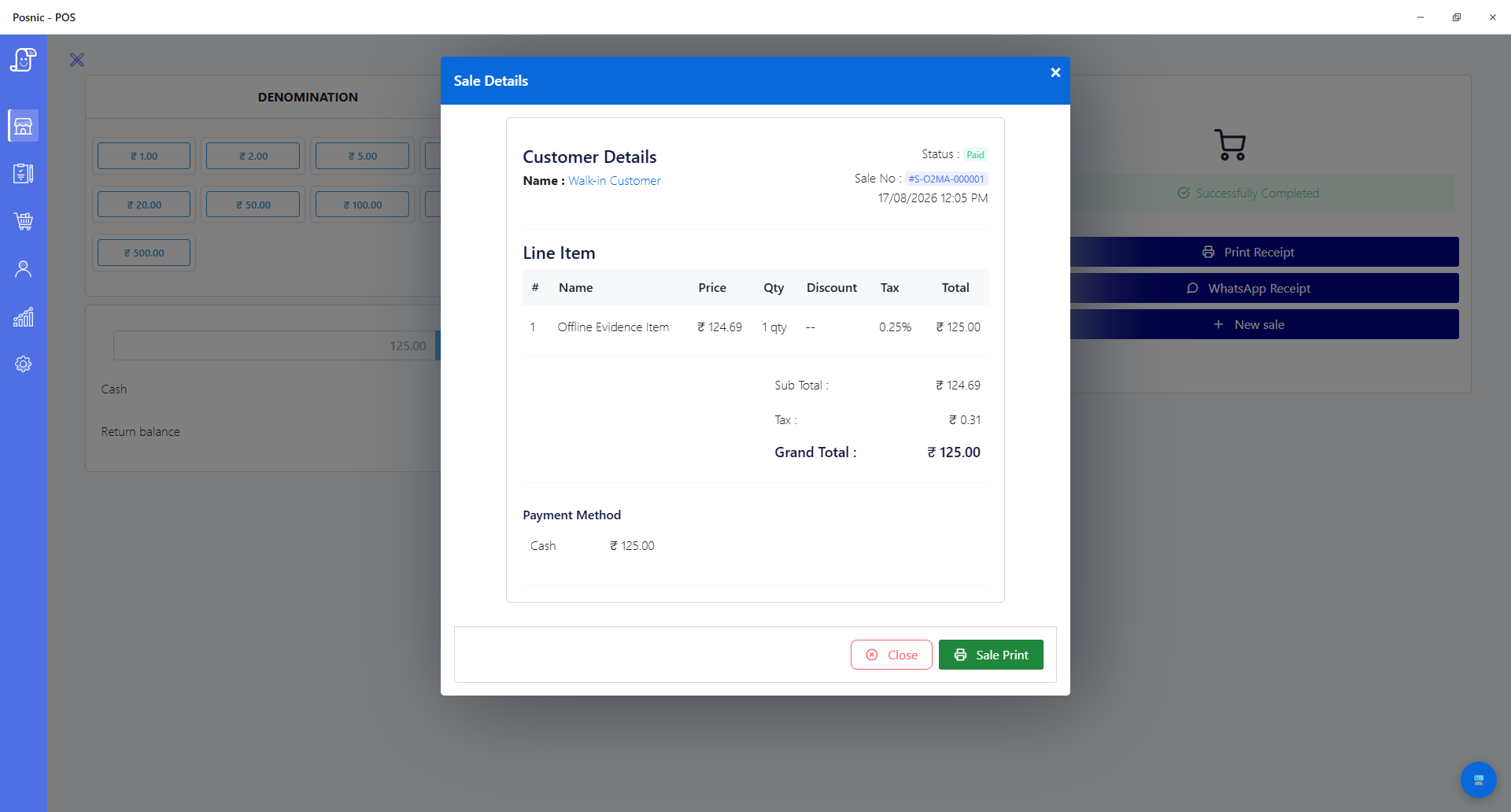
| Local sale | One INR 125 cash sale was completed and reopened while external hosts were blocked inside Electron and the local API remained available. | This was not an operating-system network disconnection, power-loss test, payment-terminal test or complete shift. |
| Backup and restore | A synthetic backup covered 20 collections and 53 documents; restore removed a post-backup mutation and retained the original item and sale. | The run used a disposable profile, not a production database, off-site schedule or disaster drill. |
| Implementation support | 55 focused implementation-supporting tests passed for backup paths, receipt/report layout, import-template structure and scale parsing. | No bulk UI import, physical printer, scanner, drawer, scale, payment terminal or customer cutover was executed. |
| API suite | The curated API Jest run passed 7,953 tests with zero failures. Developer evidence | It was not a hosted functional run, independent security audit, hardware test or proof of one exact endpoint total. |
| Distribution and security | Release metadata discloses an unsigned Windows installer, signed but not notarized macOS builds, hardware support levels and no commissioned independent security audit. | Do not remove these warnings from a buyer's acceptance decision. |
Inspect the product evidence
Which model should you test first?
Test Posnic first
Start here when a local desktop runtime, public AGPL source, Windows/macOS/Linux packages and an optional cloud path match the operating model. Keep the installer, hardware and security limitations in the pilot.
Test OSPOS first
Start with OSPOS when the team already owns a secure PHP and MySQL/MariaDB web stack and browser access is preferable to installing a desktop runtime on each till.
Test Odoo first
Start with Odoo when POS must sit inside a broader ERP and the business can evaluate edition, hosting, implementation and hardware dependencies as one program.
Test uniCenta first
Start with uniCenta when its Java desktop, multi-terminal and retail or hospitality model fits, and the team has selected a precise community or supported release path.
Test Floreant first
Start with Floreant when restaurant-specific Java workflows are the priority and the exact build, MRPL terms, database, plugins and maintenance provenance are acceptable.
Stop the selection
Reject every candidate if no one owns backup restore, security updates, payment/fiscal acceptance, physical hardware testing and recovery. Source code cannot replace operations.
Primary sources used in this comparison
Posnic
Odoo
uniCenta
Floreant
Continue with the exact evidence path
Use the broad owner for architecture selection, then move to the focused source, download or product-pair evidence that matches the decision.
Product comparisons
Open-source POS questions
Is there one best open-source POS for every business?
No. The right choice depends on operating model, required workflows, hardware, payment and tax obligations, technical ownership, license duties, support and data exit. Test every shortlist product against the same acceptance pack.
Does open source mean a POS costs nothing to operate?
No. Source rights do not remove the cost of hardware, hosting, deployment, updates, backups, integrations, support, training, security work or downtime. Compare total operating responsibility as well as software price.
Will every open-source POS work without internet?
No. Offline behavior follows the architecture and the exact workflow. A local database, a self-hosted web server and a browser cache fail differently. Test sale, return, close, payment, printing and recovery during a controlled outage.
What does Posnic's AGPL-3.0-only license require?
The license grants important use, study, modification and redistribution rights, with reciprocal source obligations that can apply when modified software is provided over a network. Read the repository license and obtain legal advice for the intended distribution or service model.
Is open-source POS software automatically secure?
No. Public source makes inspection possible; it does not prove that an audit occurred or that a deployment is secure. Review supported versions, dependencies, advisories, secrets, access control, backups and the incident owner.
Is Posnic a good open-source POS for Windows?
Posnic publishes a Windows x64 installer and portable build. The published release notes describe Windows packages as signed and timestamped, but a buyer should still verify checksums, test the exact hardware and complete a controlled pilot before production.