Global POS evaluation and country directory
POS software worldwide: prove country readiness before rollout
Posnic can be downloaded and evaluated in many places, but a downloadable package is not a worldwide compliance certificate. Use this guide to test currency, language, local time, tax, receipts, barcodes, payments, hardware, privacy, outages and recovery for the exact market before a till goes live.
Evidence and claim boundary
Reviewed 2026-08-19. This guide combines a fixed query-only Search Console cohort, the public stable-release manifest, pinned product source and official international standards guidance. The cohort contained 78 manually reviewed country or city POS queries, 517 impressions and no clicks. It identifies an information need; it does not prove that this hub or any local page ranked for those queries.
Stable release: v1.9.0, source commit archived source snapshot. The release has official packages for Windows x64, macOS Apple Silicon and Intel, and Linux x86_64 or amd64. That distribution evidence says nothing by itself about a country's legal, fiscal, language, device, payment or support requirements.
No production country rollout, local tax acceptance, translated cashier workflow, right-to-left interface, physical device set, payment-provider settlement, government filing, customer outcome or local support response was executed for this review. A country or city link below is a navigation index, not evidence of Posnic market presence.
Worldwide availability and local readiness are different
Package availability
Official desktop packages and checksums let a buyer obtain and inspect the same tagged release. Platform coverage is a release fact, not approval for a business or jurisdiction.
Configuration evidence
Source fields for currency, tax and time zone create things to test. A field does not prove correct minor units, rounding, date boundaries, documents, reports or filings.
Accepted operation
A named owner must approve representative transactions on exact equipment, then retain tax, payment, privacy, outage, restore and export evidence for the intended market.
What the reviewed Posnic release establishes and does not establish
| Area | Observed evidence | Required local decision |
|---|---|---|
| Release and platforms | Tagged packages and checksums are published for Windows x64, macOS arm64 and x64, and Linux x86_64 or amd64. | Install, update, trust and remove the exact package on every planned device and operating-system build. |
| Local edition | The documented local edition has no Posnic account, timed trial or Posnic analytics requirement and stores shop data locally unless an optional integration or cloud service is enabled. | Map every enabled integration, backup, export and support path to the market's current privacy and data-transfer duties. |
| Currency | The pinned branch model exposes currency fields, but its defaults are INR and one PDF utility formats currency as en-US USD. | Test code, symbol, placement, separators, minor units, negative values, rounding, receipts, reports and exports. Do not infer support for every currency. |
| Language and text | The pinned frontend build configuration lists English and Tamil. | Test every required language, script, translation, font, search, print, export and right-to-left layout. No other language is accepted by this review. |
| Time zone | The branch model contains a time-zone field and India-oriented defaults. | Test the exact IANA zone, midnight, daylight-saving transitions where applicable, shift close, reports, exports, sync and restore. |
| Tax and documents | The user guide documents tax settings and India-oriented GST reports. | A qualified local reviewer must approve calculation, invoice or receipt particulars, numbering, corrections, retention, reporting and filing. |
| Core retail workflow | Pinned documentation covers items, sales, purchases, returns, inventory, customers, reports and backups. One synthetic INR cash sale was reproduced on Windows. | Run a representative trading period with local products, prices, taxes, tenders, documents, users and exceptions. The reproduced sale was not a country rollout. |
| Hardware and payment | The pinned hardware matrix documents protocol and support boundaries; no physical device or payment terminal was connected in the recorded evidence. | Test exact scanners, printers, drawers, scales, displays, drivers, provider terminals, uncertain payments, refunds and settlement. |
| Outage and recovery | One sale continued with external hosts blocked inside Electron, and one synthetic backup restored 20 collections and 53 documents. | Run wider network, power, process, provider and clean-device restore drills against approved recovery objectives. |
| Service and presence | Posnic publishes support and contact routes from India. | Obtain a written service scope for the intended location. Do not infer a local office, installer, reseller, adviser, device supplier or response time. |
Run nine country-readiness workstreams
1. Language and direction
Use real item names, customer names, addresses, notes and receipts. Verify fonts, keyboard entry, search, sort, wrapping, export, print and mixed left-to-right or right-to-left text.
2. Currency and rounding
Approve the ISO code, display name, symbol, minor units, grouping, decimal mark, negative format and line-versus-document rounding for sales, returns and reports.
3. Local date and time
Exercise opening, midnight, shift close and clock changes in the intended IANA zone. Compare on-screen, printed, exported and restored timestamps.
4. Tax and fiscal documents
Give a responsible local reviewer normal, exempt, zero-rated, mixed, discounted, returned and corrected examples. Keep certification and filing claims outside the product unless separately proven.
5. Product identity and units
Test local GTINs, internal SKUs, unknown codes, duplicate scans, packs, pieces, length, volume and weighed goods. Device decoding is separate from application interpretation.
6. Payments and settlement
Test cash and each provider with success, decline, timeout, duplicate, refund and chargeback states. Reconcile the till record, receipt, provider record and bank settlement.
7. Privacy and access
Inventory customer, employee, supplier, support, export and backup data. Assign collection, access, retention, transfer, deletion and incident responsibilities.
8. Devices and outages
Use exact computers, operating systems, printers, scanners, drawers, scales, displays and networks. Record what continues and what stops when each dependency fails.
9. Recovery and handoff
Restore off-machine backup evidence into a clean setup, then reconcile representative transactions and exports with the accounting or statutory process that receives them.
Keep a 24-control market readiness record
The worksheet covers release provenance, platform, language, direction, currency, number format, rounding, time zone, tax, receipts, numbering, product identity, units, payments, privacy, roles, hardware, outages, power interruption, restore, export, support and pilot approval. Every result starts blank.
Record the country, configuration, sample, expected result, observed result, evidence reference, accountable business owner, specialist review and pass or fail decision. A published row is not a pass.
Product screens to include in a local pilot
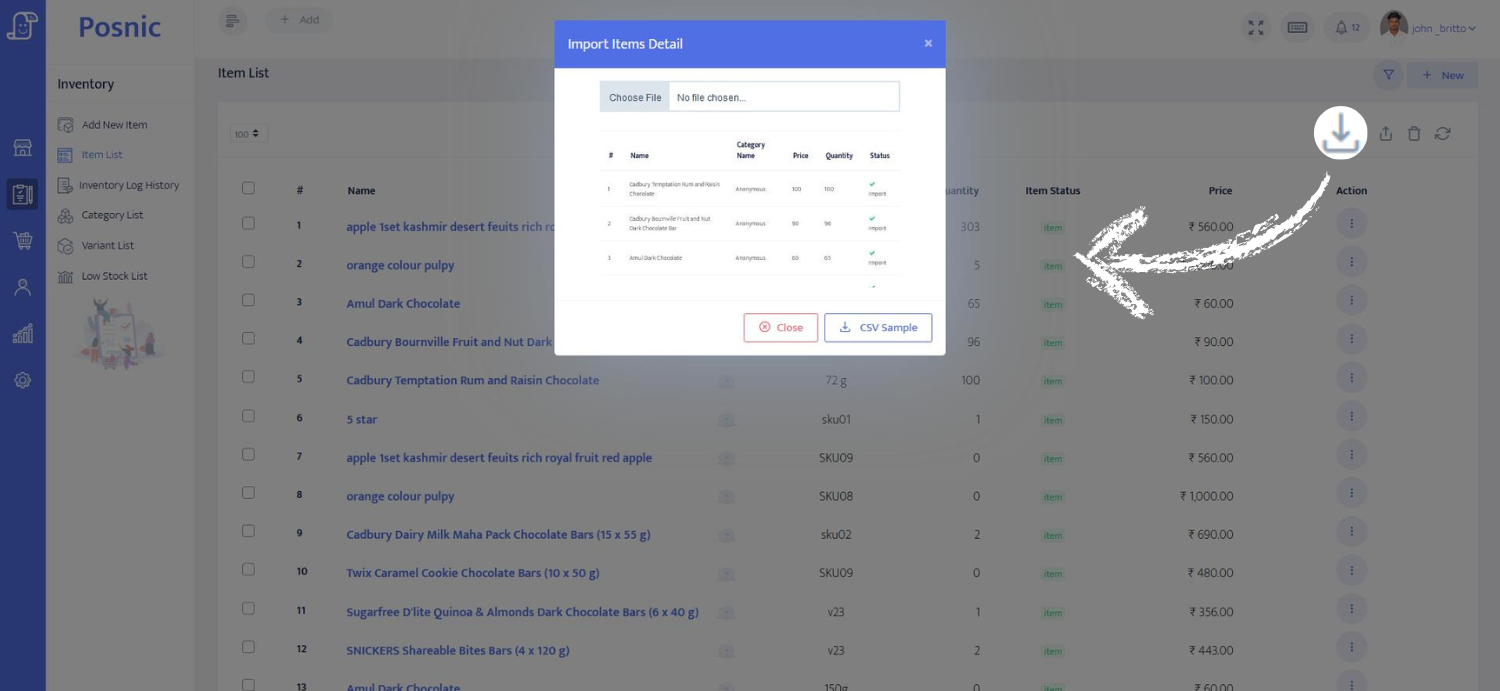
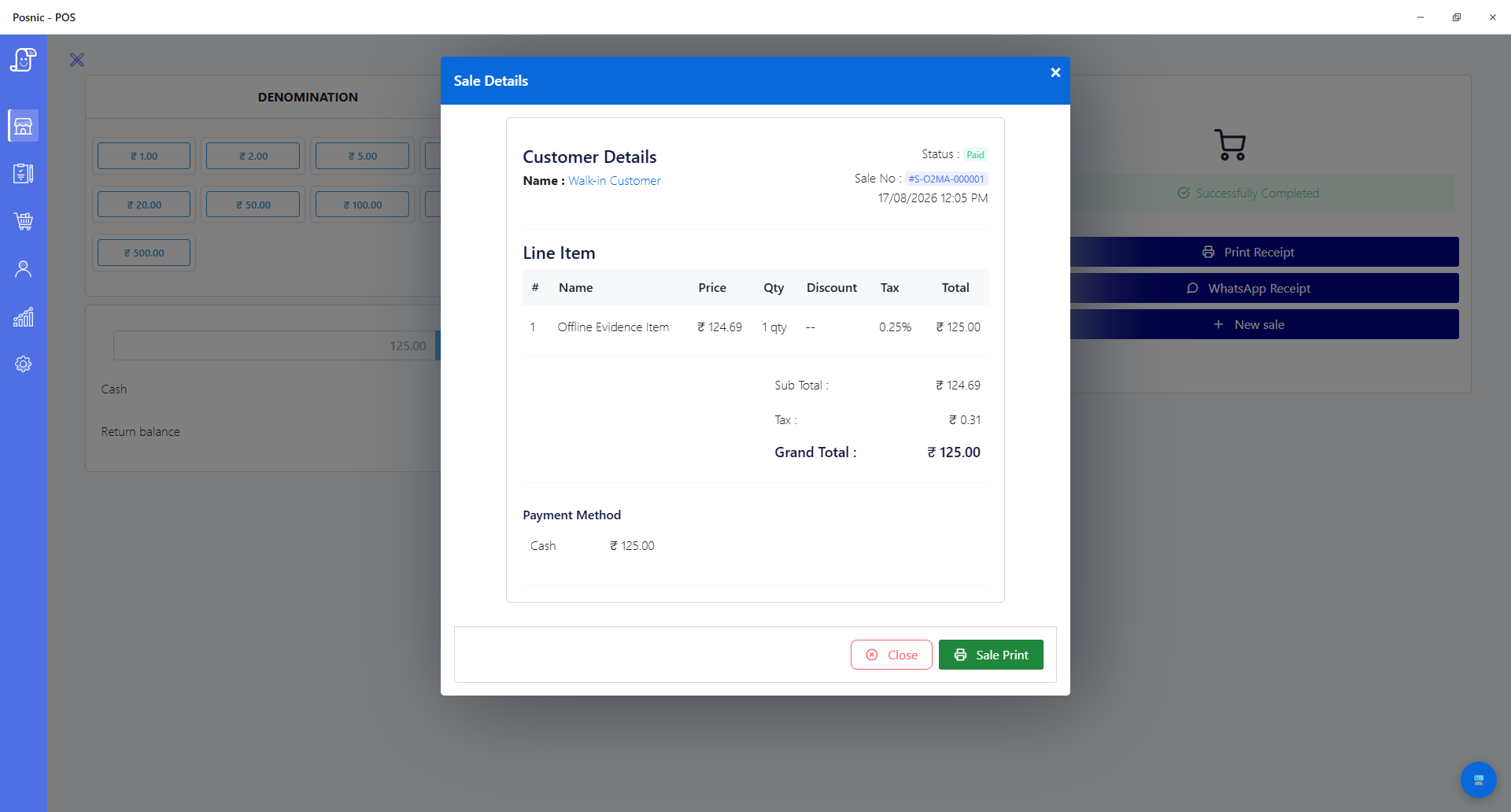
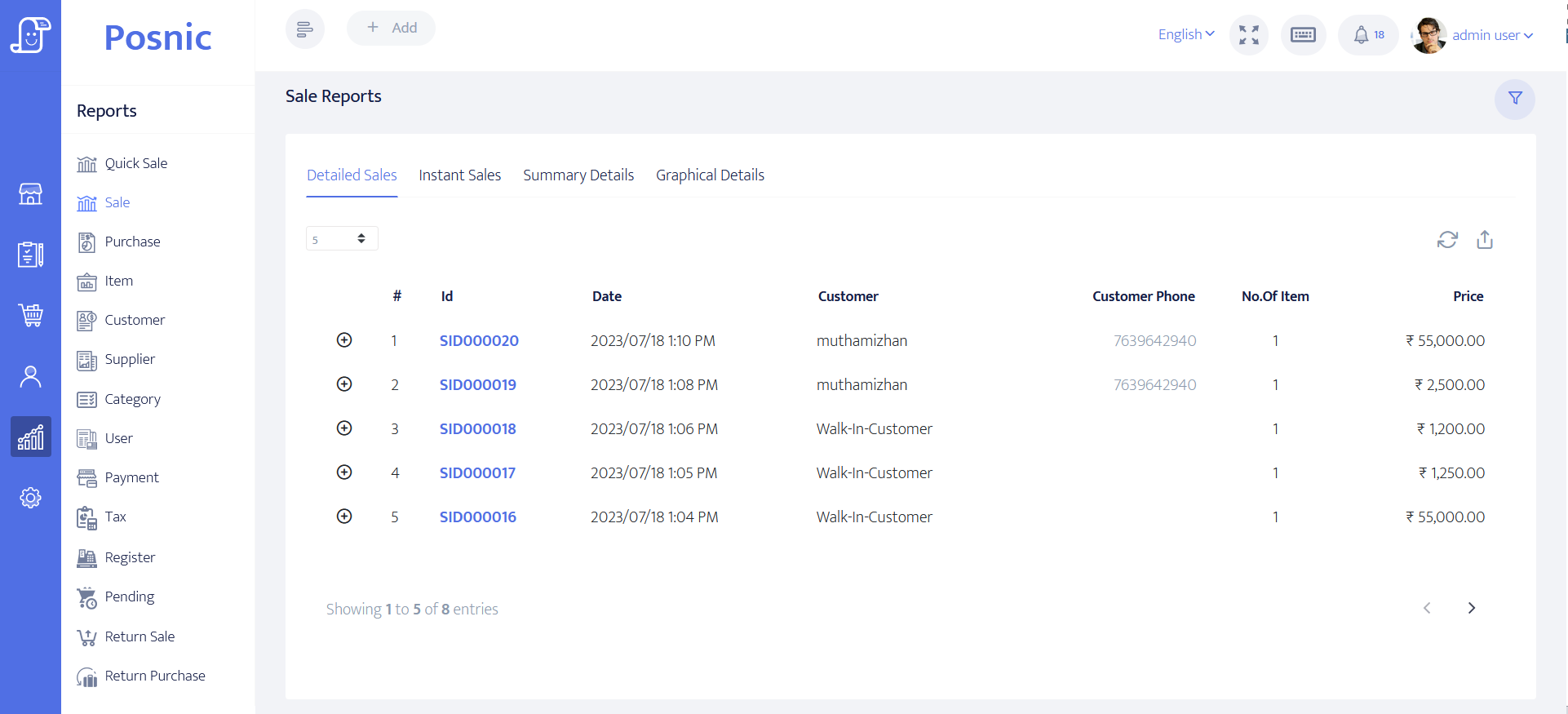
Country indexes informed by observed search language
The fixed query cohort included generic POS searches naming the countries or cities represented below. These links help buyers find an evaluation path. They do not identify a winning landing page and do not claim a local office, installation, customer, certification or support team.
Why there is no automatic country recommendation
The supplied Search Console export contains query, click, impression and source-part fields only. It has no landing page, date, country, device, click-through rate or position dimensions. Until Query x Page evidence and market acceptance exist, every location-level winner remains blocked.
Additional existing evaluation routes
These established routes remain connected for people who already know the URL. They carry the same navigation-only boundary and do not prove local presence or product acceptance.
Questions buyers ask
Can Posnic be downloaded outside India?
The official archived evidence run publishes Windows, macOS and Linux packages without a Posnic account requirement. Download availability does not establish country-specific tax, receipt, language, payment, hardware, privacy or support readiness.
Does Posnic support every currency?
No universal currency claim is made. Currency fields exist, but the reviewed source includes INR defaults and a USD-formatted PDF path. Test the intended ISO currency code, symbol, minor units, separators, negative values, rounding, receipts, reports and exports.
Is Posnic certified for tax compliance in every country?
No. Posnic has no blanket global tax certification. A qualified local reviewer must approve the exact tax cases, document particulars, numbering, correction, retention, reporting and filing workflow for the business.
Does Posnic support every language and right-to-left interface?
No. The reviewed build configuration lists English and Tamil. Other scripts, translations and right-to-left layouts were not accepted. Test all required text in entry, search, display, print, export and restore before rollout.
Does selecting a time zone prove local reports are correct?
No. A time-zone field is only a configuration input. Test opening, closing, midnight, daylight-saving changes where applicable, reports, exports, backups and integrations using the exact location and operating system.
Do Posnic country pages mean there is a local Posnic office?
No. Country and city pages are navigation and evaluation pages. They do not prove a local office, reseller, installer, customer, certification, tax adviser, device supplier or service commitment.
Will every local printer, scanner, scale and payment terminal work?
No universal hardware or payment claim is made. Test the exact device, interface, driver, operating system, provider, receipt and failure path. The pinned hardware matrix marks integrated payment terminals and label printers as not implemented.
What is the minimum test before a country rollout?
Run a controlled pilot on exact equipment with representative products, local text, currency, tax, receipt, payment, return, closing, outage, backup, restore and export cases. Keep every failed or blank control visible until named reviewers approve or reject it.
Primary sources used
archived Posnic evidence
Official package, architecture, size, checksum and signing evidence for the stable release.
Posnic pinned user guide
Product documentation for setup, currency and tax settings, sales, purchases, returns, reports, hardware and backups.
Posnic product facts
Machine-readable release, runtime, restore, platform, license and limitation evidence used to keep claims versioned.
GNU AGPL version 3
The official license text governing Posnic Community Edition source and distribution.
ISO 4217 currency codes
Official code and minor-unit reference. A currency code is one input; it is not a complete locale or tax implementation.
Unicode CLDR formats
Primary guidance showing how number, currency, grouping, decimal, negative and bidirectional formats vary by locale.
W3C language guidance
Primary internationalization guidance for language metadata and language-sensitive processing.
IANA time-zone database
Primary time-zone identifiers and periodically updated civil-time data used to frame local clock-change testing.
GS1 barcode standards
Primary product-identity and barcode guidance for GTIN, linear, DataBar and 2D retail use cases.
PCI SSC merchant process
Primary merchant guidance for understanding payment flow, account-data exposure and provider responsibility.
NIST contingency planning
Primary recovery-planning guidance used to structure outage, backup, restore and exercise decisions; it is not presented as local retail law.