Free small-business POS evaluation
Free POS software for small business: what free really covers
Free can mean a zero-price local application, a limited plan, software bundled with payment processing, or open source that the business operates itself. Compare the full responsibility and cost model before trusting any free label at the counter.
Evidence and review scope
Evidence reviewed 2026-08-28. A fresh Google and Bing suggestion capture for six free-small-business POS seeds preserved 43 Google and 54 Bing responses, a current English-language result review examined free-plan comparison patterns, and official GNU, NIST, PCI SSC, GS1 and CISA guidance was reviewed beside release-pinned Posnic evidence.
Stable release: v1.9.0, source commit 567a176. Autocomplete is not search volume, the result sample is not a complete ranking dataset, and the reproduced Posnic runs used synthetic data with explicit interface, hardware, payment, recovery and production limits
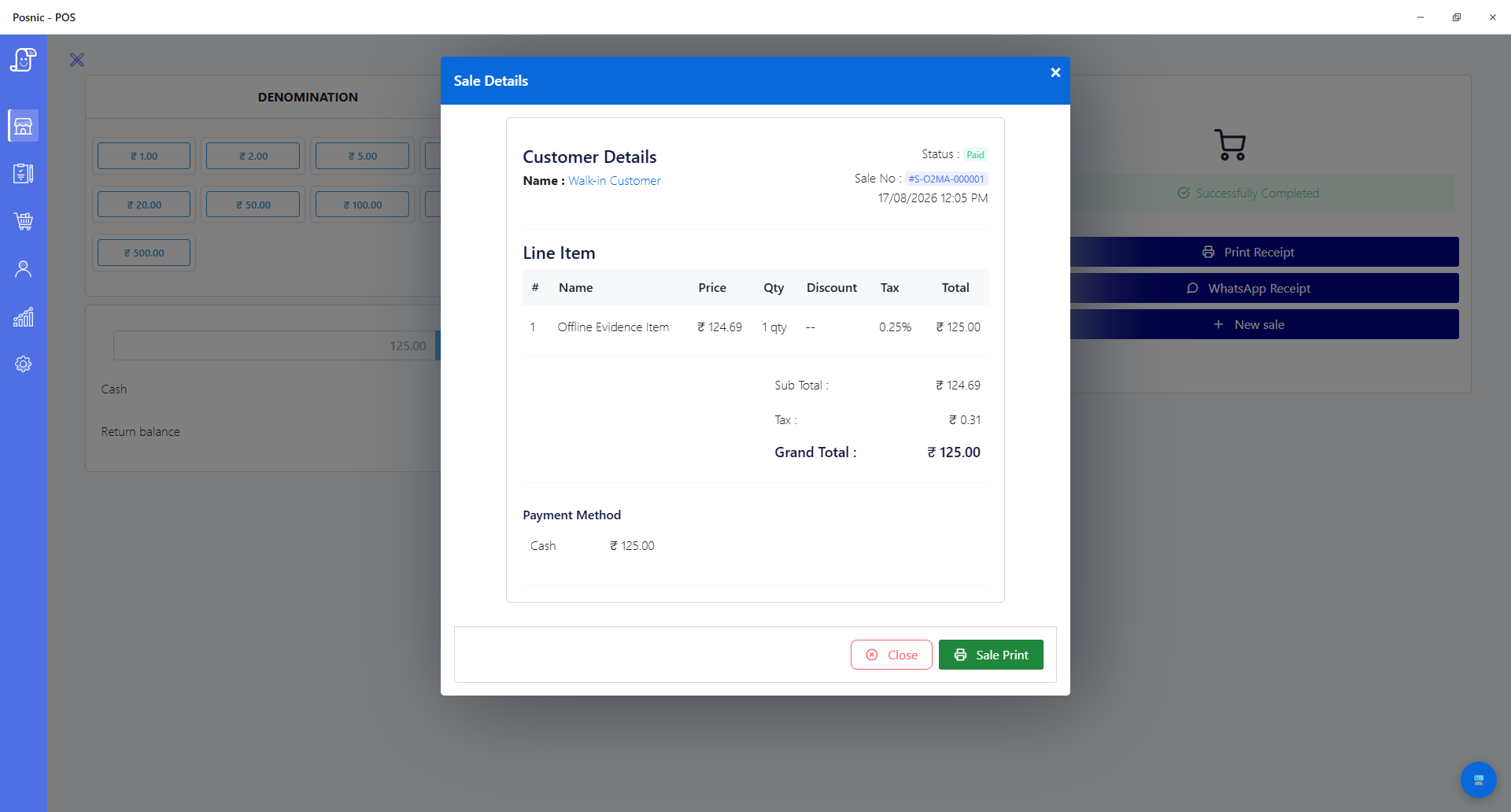
A compressed API counter session passed 49 checks across 12 sales, 20 sold units, one return, stock reconciliation, payment labels, reporting and register close. Separate inventory and packaged backup runs retain separate scopes and are not combined into one score.
Publisher disclosure: Posnic Innovations Private Limited makes Posnic POS. This page explains the free local edition and a buyer method; it does not independently rank free POS products or claim that Posnic is best for every small business.
Free answers four different questions
Price is not total cost
A monthly software price can be zero while devices, payment processing, setup, training, support, backup storage, updates and downtime still belong to the business.
Free is not open source
A free plan describes price and limits. An open-source license describes rights and obligations. A buyer has to inspect both, plus package dependencies and the operating model.
Best is an acceptance result
A publisher list is useful research, not proof of fit. Use the same catalog, counter shift, devices, payment paths, outage drill, restore and cost record for every finalist.
Expose the costs and responsibilities behind free
| Decision | Question to answer | Evidence to keep | Failure condition |
|---|---|---|---|
| Software entitlement | Is this a permanent edition, a time-limited trial, a feature-limited plan or source code the business must operate? | Current terms, version, limits, account requirement, license and upgrade path. | The free label cannot be tied to a version and written terms. |
| Payment model | Does the offer require a processor, terminal, contract or rate schedule? | Provider agreement, authorization path, per-transaction fees, settlement and refund evidence. | A free POS label hides a mandatory payment commitment. |
| Hardware | Which computer, printer, scanner, drawer, scale, display and terminal are required? | Exact models, interfaces, drivers, physical tests, fallback and replacement cost. | Compatibility is inferred from a device category or logo. |
| Core workflow | Do sale, correction, return, stock, close and required vertical tasks work within the free boundary? | Controlled shift, receipts, role records, movement ledger, reports and exception list. | A mandatory task requires an undisclosed paid feature or workaround. |
| Data and exit | Can the business obtain and independently use the records it must retain? | Export samples, field map, row and total reconciliation, retention rule and exit effort. | Usable records depend entirely on the vendor account or failed system. |
| Updates and security | Who monitors releases, patches the device, controls access and responds to incidents? | Named owner, update procedure, access review, source or vendor notice and rollback plan. | The business has no accountable maintenance owner. |
| Support and change | Who handles setup, training, defects, custom work and urgent counter failure? | Written support scope, response path, exclusions, training record and business workaround. | Free software is assumed to include unlimited implementation or support. |
| Recovery and downtime | Can the business restore after software, database, device or site failure? | Off-machine backup, clean restore, recovery time, accepted data loss, outage drill and contingency cost. | The only backup is beside the failed system or has never been restored. |
What the Posnic free local evidence establishes
| Evidence set | Observed or documented result | What remains unproved |
|---|---|---|
| Price and access | The pricing and download owners document the local Community Edition at USD 0 with no trial timer or Posnic account. | Hardware, setup, staff time, payment processing, support, connectivity, backup storage and optional services can cost money. |
| Source and package licenses | Posnic's own source is AGPL-3.0-only; the packaged application also includes MongoDB Community Server under SSPL-1.0. | A short license summary is not legal advice and does not remove operating, trademark or dependency obligations. |
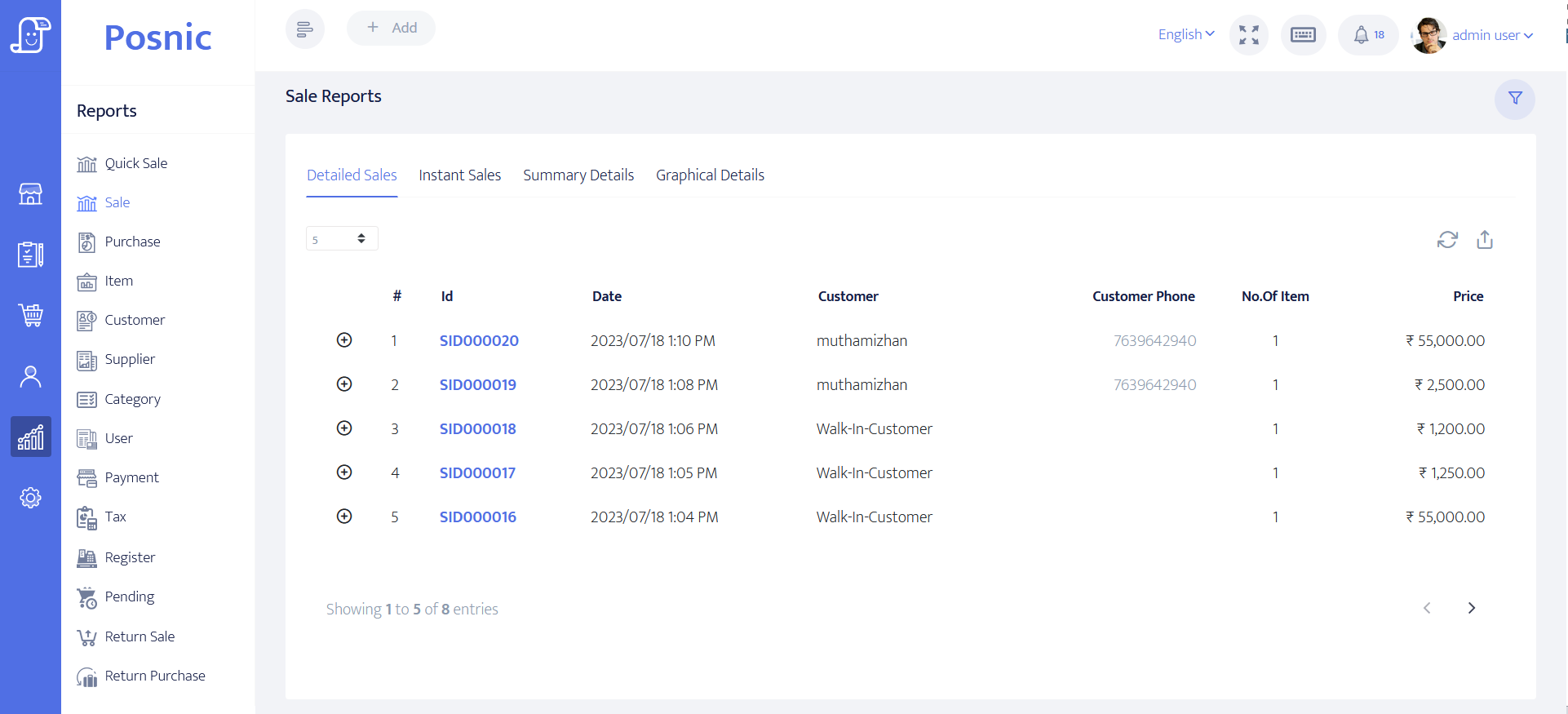
| Counter session | 49 of 49 assertions passed across 12 synthetic sales, 20 sold units, one return, INR 2,622 net sales, stock reconciliation, reporting and a closed register. | This was a compressed HTTP API and MongoDB run, not the packaged interface, physical cash, hardware, payment processing or a clock-length shift. |
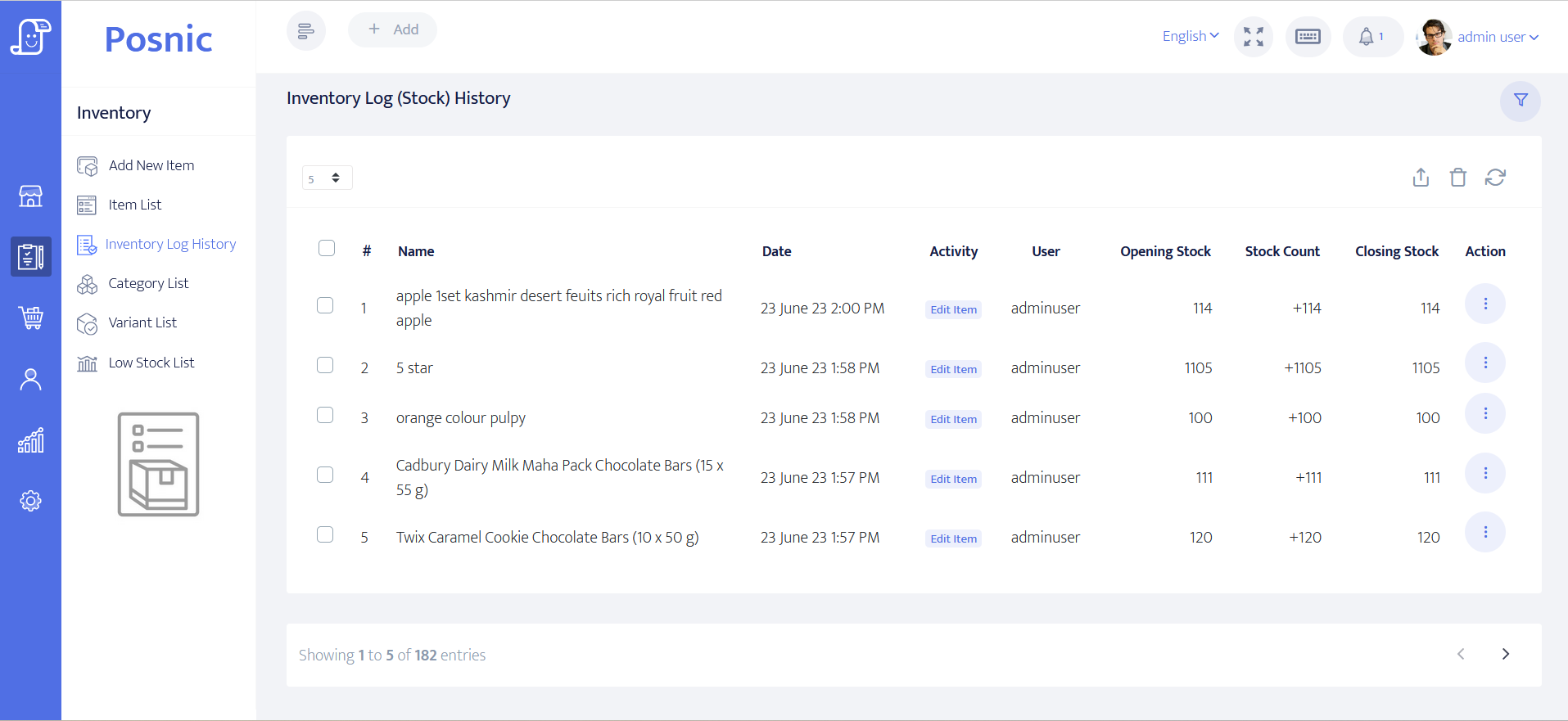
| Inventory lifecycle | 21 of 21 assertions passed; 100 opening units plus 20 received minus two sold plus one returned reconciled to 119 without duplicate replay movement. | No physical count, scanner, concurrent tills, customer data or complete trading day was tested. |
| Backup and restore | The published Windows portable package restored 20 collections and 53 synthetic documents; 14 of 14 path-security tests passed. | The small EJSON backup was unencrypted and did not prove damaged-media, replacement-device, off-site, production, recovery-time or data-loss targets. |
Evaluate a free POS in eight passes
- Write the business scope first: channels, registers, locations, roles, peak load, catalog shape, tax and receipt review, payments, devices and exception workflows.
- Classify each candidate's free model as permanent software, limited plan, processor-funded offer, source distribution or trial; retain the exact terms and date.
- Enter every one-time, monthly and transaction-linked cost in the same worksheet, including owner time and an approved downtime allowance.
- Download only from the official owner, record the exact version and hash, and preserve the package needed for rollback or rebuild.
- Load a representative catalog and opening stock, including variants, awkward identifiers, discounts, returns and zero-stock cases.
- Run a controlled shift with the exact staff roles, hardware and payment paths; reconcile receipts, cash, provider records, stock and reports independently.
- Interrupt required dependencies, create an off-machine backup, restore to a disposable target and export the records the business must retain.
- Approve the candidate only after mandatory failures, paid boundaries, maintenance owners, support exclusions and rollback conditions are written and accepted.
Compare one-time and recurring cost on the same record
The reusable 12-line worksheet covers till hardware, peripherals, setup, migration, training, backup storage, hosting, payment and messaging providers, updates, support, custom work and downtime. Blank quantities and prices prevent publication from looking like a completed estimate.
Inspect real Posnic surfaces, then run the evidence
Questions buyers ask
What is the best free POS software for a small business?
There is no universal winner. The best fit is the candidate that passes the business's mandatory counter, payment, stock, hardware, outage, recovery, data-exit and total-cost controls. Posnic publishes Posnic, so this page is product evidence and a method, not an independent ranking.
Is Posnic POS free or only a trial?
Posnic documents its local Community Edition at USD 0 with no trial timer or Posnic account. The business still supplies and operates its hardware, payment arrangements, backups, updates and support path; optional services can cost money.
Does free POS software include payment processing?
Do not assume it does. Software can record a tender label while a separate provider, terminal, contract, authorization, fee, settlement and refund process handles the money. Verify each responsibility independently.
Are free POS and open-source POS the same?
No. Free describes a price boundary, while open source describes license rights and obligations. A product can be free without public source, open source with operating costs, both, or neither.
Can a free POS work without internet?
Test task by task. Local checkout may continue while payment authorization, hosted ordering, remote dashboards, support, updates or sync still require a network. A general offline label is not enough evidence.
What should a small business budget beyond POS software?
Budget hardware, setup, migration, training, payment processing, connectivity, backup storage, updates, security administration, support, replacement devices, downtime and exit work. Use realistic quantities and transaction assumptions.
Primary sources used
Posnic pricing evidence
The pricing owner separates the USD 0 local Community Edition from optional services and buyer-owned hardware, payment, setup and operating costs.
Posnic counter-session evidence
The machine-readable artifact preserves the pinned source, 49 checks, sales, stock, register result and limitations used on this page.
Posnic packaged backup evidence
The artifact identifies the exact Windows portable package, backup format, collection and document counts, restore result, path tests and limitations.
GNU Affero General Public License
The GNU license text is the primary reference for AGPL-3.0 rights and obligations. The page summary is navigation, not legal advice.
NIST CSF 2.0 for small business
NIST's small-business material organizes cybersecurity risk work across Govern, Identify, Protect, Detect, Respond and Recover.
PCI SSC small-merchant guidance
PCI SSC states that PCI DSS is intended for payment-processing merchants regardless of size or transaction volume and directs validation questions to the acquirer or payment brand.
GS1 2D barcodes at retail POS
GS1's retail point-of-sale guideline describes the industry transition to two-dimensional barcodes. Use the actual symbols, encoded data and devices in acceptance testing rather than treating a barcode label as proof of compatibility.
CISA small-business resources
CISA's small- and medium-business landing page routes businesses to its current Secure Your Business, supply-chain risk management, alert and resilience resources.