POS inventory acceptance guide
POS inventory management and billing software: test the stock ledger
A bill changing on-hand quantity is only the first control. Reliable POS inventory needs product identity, receiving, sale, return, adjustment, count, valuation, backup and exception records that can be reconciled.
Evidence and review scope
Evidence reviewed 2026-08-28. Fresh Google and Bing autocomplete capture for five inventory-POS seeds, a current English-language result review, official GS1, IFRS and NIST guidance, and release-pinned Posnic inventory evidence.
Stable release: v1.9.0, source commit 567a176. The reproduced run used synthetic data through the HTTP API. It did not drive the packaged interface, connect a scanner or payment network, use customer data, perform a physical stocktake or execute a complete trading day.
One receiving, one sale and one partial return reconciled from 100 opening units to 119 closing units. Duplicate sale and refund replays produced no second stock movement.
Inventory accuracy is a chain of records
Quantity is a ledger
Opening stock plus accepted receipts and customer returns, plus or minus signed adjustments, minus sales, supplier returns and losses should equal closing stock. A single editable quantity cannot explain why it changed.
Identity comes before counting
SKU, barcode, variant and selling unit must identify one intended trade item. GS1's GTIN rules also distinguish base units from higher packaging levels and certain material product changes.
On-hand is not accounting valuation
A POS can record physical movement without deciding the business's valid cost formula, write-down or financial statement treatment. Accounting policy and local rules require separate approval.
Test every inventory record before go-live
| Record | Question | Evidence to keep | Stop condition |
|---|---|---|---|
| Product identity | Does each sellable unit resolve to one intended item? | Approved SKU, barcode, name, variant, unit, pack rule and active status. | Duplicate or ambiguous identifiers remain. |
| Opening balance | What quantity and cut-off time started the ledger? | Signed count sheet, import file, accepted rows, rejects and opening report. | The opening count cannot be reproduced. |
| Receiving | Did one supplier delivery add the accepted quantity once? | Supplier document, unit cost, tax, received quantity and stock movement. | Pack conversion or duplicate receipt is unexplained. |
| Sale and return | Did billing reduce stock and a valid return restore only the accepted quantity? | Original sale, receipt, return link, payment result and item movement. | Money, bill and stock disagree. |
| Adjustment and count | Can a variance be explained without silently overwriting history? | Before and after quantity, reason, user, approver and physical count sheet. | A user can erase the reason for change. |
| Branch or channel | Which location owns available-to-sell quantity? | Location mapping, reservations, transfer state, conflict and recovery records. | Two systems can sell the same last unit without a rule. |
| Valuation | Which approved accounting treatment converts quantity to carrying value? | Cost inputs, formula, write-down evidence, period and accountant approval. | A POS quantity report is treated as a complete accounting ledger. |
| Recovery and exit | Can records be restored and exported independently? | Off-machine backup, restore log, export files, row counts, totals and retention decision. | Only an untested same-disk copy or vendor-only view exists. |
What archived Posnic evidence establishes
| Observed control | Result | Boundary |
|---|---|---|
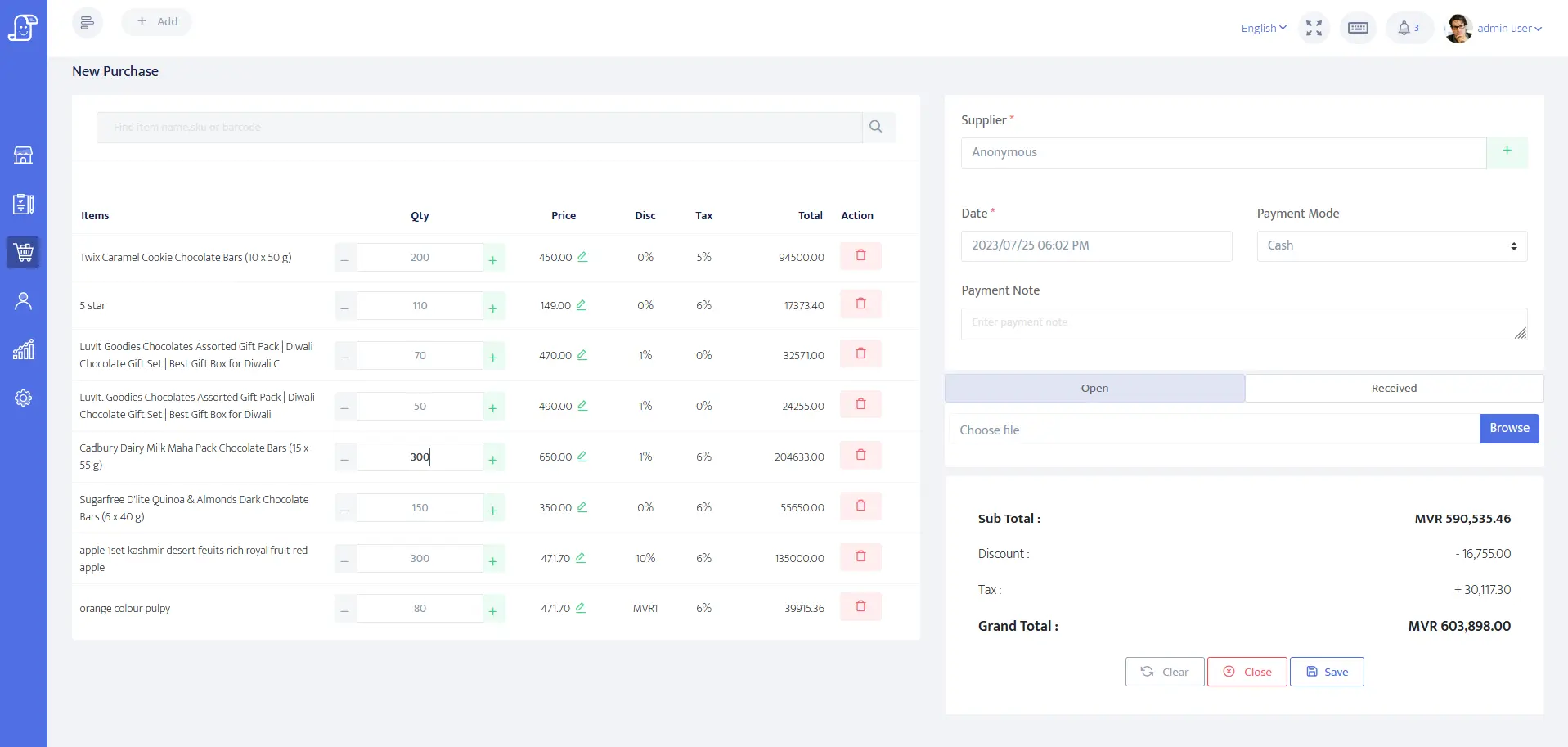
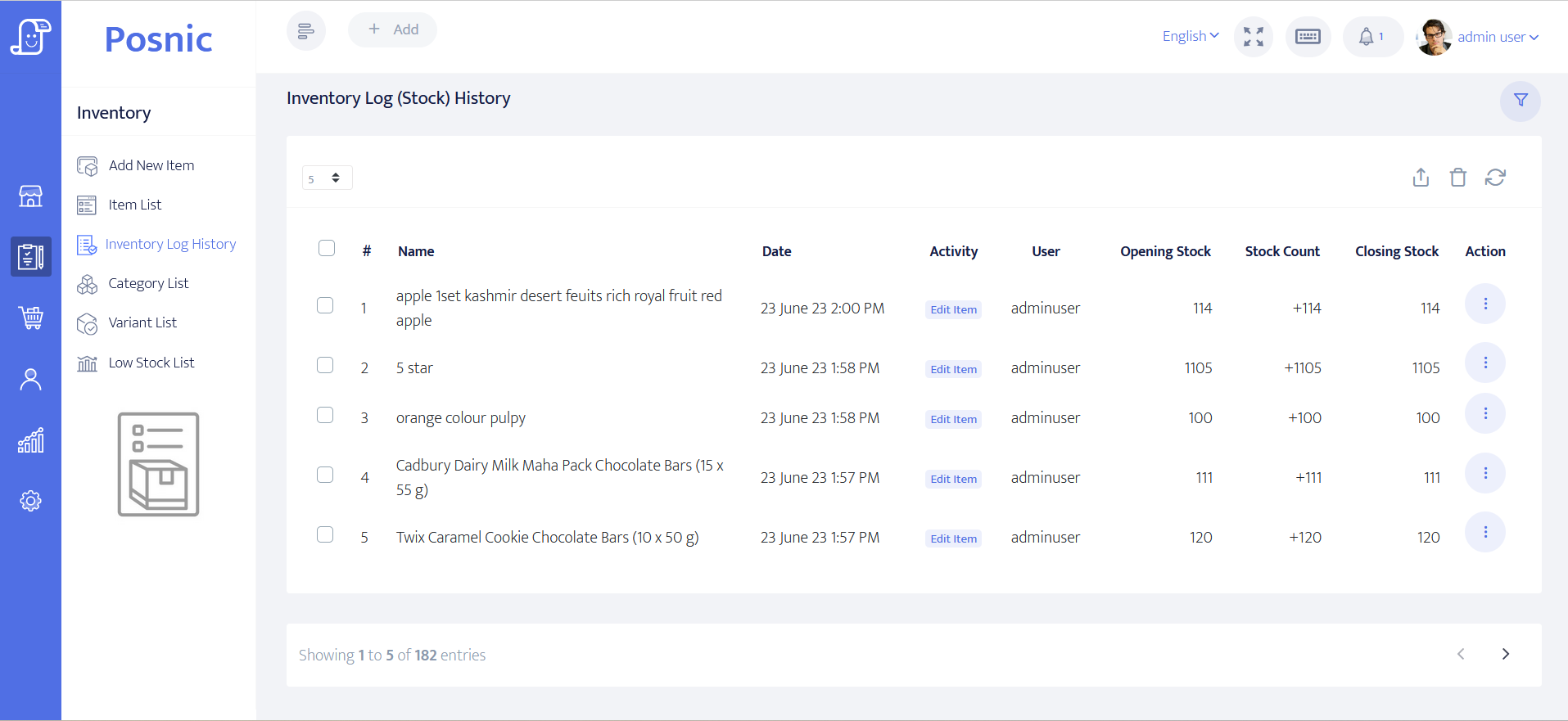
| Receiving | Twenty units moved the seeded item from 100 to 120 and one receiving document persisted. | No supplier delivery, physical count, pack conversion or packaged interface was exercised. |
| Sale | A two-unit cash sale moved stock from 120 to 118 and one sale document persisted. | Cash was a stored label; no payment network, receipt printer or scanner was connected. |
| Duplicate sale replay | Replaying the same billing transaction returned the existing sale and did not deduct stock again. | This is one synthetic API case, not a concurrency, outage or full-day result. |
| Partial return | Returning one unit moved stock from 118 to 119 and retained one return transaction. | No customer refund, tax-jurisdiction or payment-provider settlement was exercised. |
| Duplicate return replay | The repeated refund was rejected with HTTP 409 and did not restore stock twice. | One exact payload was tested; other retry, race and integration paths still need acceptance. |
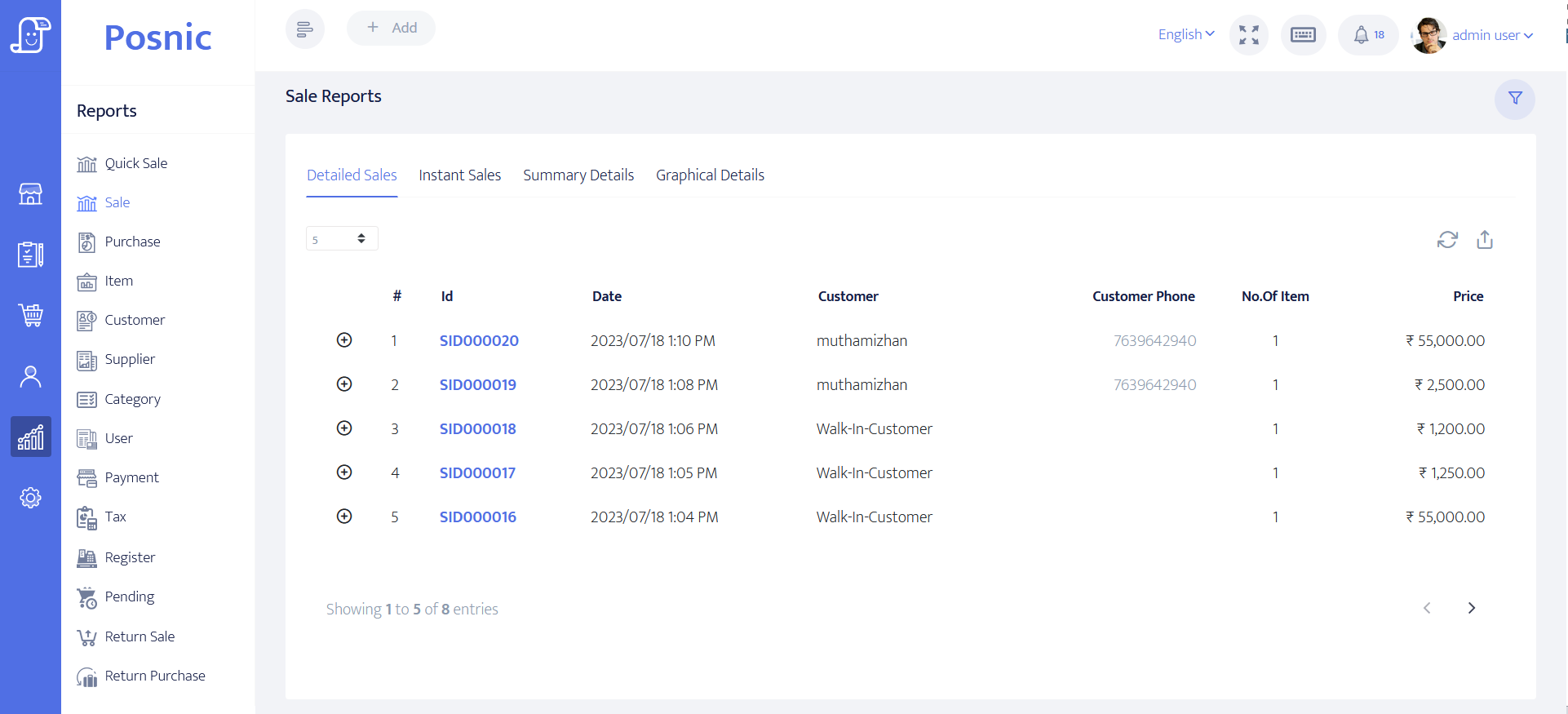
| Stock and sales records | Three stock-log documents and the sales report reconciled to INR 138 net sales. | No accounting ledger, physical stocktake, shrink record or external settlement was compared. |
| Import and recovery | Seven stable CSV templates passed structural checks and a separate synthetic backup-and-restore test exists. | The archived evidence did not execute a bulk UI import or a production recovery. |
| Unaccepted depth | No complete batch, serial, expiry, multi-device, multi-branch transfer, ecommerce reservation or automated replenishment result is claimed here. | Treat each required workflow as a mandatory pilot control rather than an inferred feature. |
Define the stock equation before configuration
- Write the inventory boundary: stores, stockrooms, branches, channels, consignment, damaged goods and in-transit stock.
- Define one identifier and selling unit for every representative item, including variants, packs and products whose barcode or declared quantity changes.
- Freeze a counted opening balance with a cut-off time; keep the source file, accepted rows, rejected rows and signed physical count.
- List every allowed movement and its sign: receipt, sale, return, supplier return, transfer, adjustment, waste, damage and stocktake variance.
- Assign who may create, approve, reverse and review each movement; test cashier, supervisor and owner accounts separately.
- Choose accounting and tax treatment with a qualified adviser instead of deriving carrying value from on-hand quantity alone.
- Set backup frequency, off-machine destination, restore test, export format and record-retention responsibility before live data accumulates.
- Pilot representative fast, slow, high-value, fractional, variant and zero-stock items, then sign the exception list before wider rollout.
Reconcile one controlled stock cycle
- Count an opening quantity and photograph or sign the source record before entering any transaction.
- Receive a known supplier quantity once, then repeat the same action or identifier to expose duplicate handling.
- Sell a mixed basket containing ordinary, discounted, returned and zero-stock cases; compare bill, payment and movement records.
- Return part of one original sale and verify original-record linkage, allowed quantity, money effect and closing stock.
- Create a known physical variance and prove that quantity, reason, user and approval remain reviewable after correction.
- Close the cycle by reconciling opening plus movements to closing, then compare the result with an independent physical count.
- Restore an off-machine backup to a disposable target and repeat representative item, sale, return, stock and user checks.
- Export the required master and transaction records, reconcile row counts and totals in a neutral tool, and record unresolved gaps.
Keep a 24-control inventory evidence record
The blank worksheet covers product identity, opening stock, receiving, sales, returns, duplicate handling, counts, valuation, branch and channel boundaries, recovery, export and owner approval. Observed-result fields are intentionally empty.
Inspect the records, then reproduce the result
Questions buyers ask
What is a POS inventory management system?
It connects checkout with item identity and stock movements so receiving, sales, returns, adjustments and counts can be reconciled from opening to closing quantity. Accounting valuation, payment settlement and physical count evidence remain separate controls.
What inventory behavior has Posnic v1.6.1 actually reproduced?
One synthetic API run passed 21 checks: 100 opening units plus 20 received minus two sold plus one returned equaled 119. Duplicate sale and refund replays caused no second stock change. It was not a packaged-interface, hardware, customer or full-day test.
Does automatic stock deduction make inventory accurate?
No. Accuracy also depends on product identity, units, opening balance, receiving, returns, adjustments, physical counts, permissions and recovery. A correct sale deduction cannot repair a wrong opening count or duplicate product record.
Can Posnic use barcode scanners for inventory billing?
Posnic the reviewed source documents keyboard-wedge barcode input, but no named scanner model is certified by this inventory evidence. Test the exact scanner, labels, item identifiers, sale, return and stock log on the production counter.
Is the POS on-hand value the accounting value of inventory?
Not automatically. IAS 2 addresses inventory cost, cost formulas, expense recognition and write-downs. The business must apply its accounting framework and local law with qualified advice rather than treating one POS quantity report as complete financial reporting.
Does this page prove batch, serial, expiry or multi-branch inventory?
No. This review did not accept a complete batch, serial, expiry, multi-device, stock-transfer, ecommerce-reservation or automated-replenishment workflow. Keep each required control as a pilot gate.
Primary sources used
Posnic inventory lifecycle evidence
The machine-readable artifact preserves the pinned release, source hashes, scenario, 21 checks, result values and limitations used on this page.
Posnic v1.6.1 release
The stable release and exact source commit bound every Posnic product statement in this review.
GS1 GTIN Management Standard
GS1 defines consistent trade-item identification and rules for new products, packaging levels and material product changes.
IFRS IAS 2 Inventories
The IFRS Foundation explains inventory cost, cost formulas, expense recognition and lower-of-cost-and-net-realisable-value treatment.
NIST contingency planning
NIST SP 800-34 provides a recovery-planning method and includes restoring systems from backup media in functional testing.
Posnic backup policy
The pinned project policy explains configurable local backups, the same-disk default risk and the need to test restores.