Official local POS download and acceptance guide
Grocery and supermarket billing software free download
A free installer is only the first decision. A grocery or convenience store should verify product identity, units, barcode lookup, weighed goods, purchases, returns, stock movement, receipt rules, hardware, closing and recovery before putting the counter live.
Evidence and review scope
Evidence reviewed 2026-08-28. A fixed three-query Search Console cohort, official retail and India-specific sources, pinned Posnic source, and the established supermarket source-test and runtime evidence.
Stable release: v1.9.0, source commit 567a176. No complete grocery or supermarket operating day, physical scanner, printer, drawer, weighing scale, payment terminal, tax acceptance or production restore was executed for this review.
The established supermarket evidence includes 1,371 API unit tests in 17 suites, 57 focused source and DOM tests, and six scale-parser tests with zero failures. Those checks do not constitute a customer deployment.
What free grocery billing software must prove after download
Free means no Community Edition license fee
The stable Posnic release and AGPL-3.0 source are public. Computers, devices, payment processing, configuration, training, support and recovery still carry their own cost and responsibility.
Grocery retail describes a workflow, not a service location
This page uses grocery and convenience store for a neighbourhood grocery counter. It does not claim local installation, tax advice, hardware supply or onsite support in a visitor's city.
Installation is not acceptance
A successful download does not prove the shop's catalogue, receipt, scale, printer, payment, stock or backup flow. Keep each failed or blank control visible until an accountable owner resolves it.
Follow one grocery item from shelf to close
| Decision | What the shop should prove | Current evidence boundary |
|---|---|---|
| Release and license | The file comes from the tagged Posnic release, its hash matches the published checksum and the shop understands the AGPL-3.0 terms. | The official release is free to obtain; that does not make rollout, hardware, payment or support cost-free. |
| Product identity | Each pack, size and selling unit resolves to one intended item with an approved name, barcode, price, tax group and opening quantity. | The source exposes item, barcode, SKU, unit, price, tax, HSN, supplier and stock fields; the shop's catalogue was not migrated here. |
| Packaged barcode | EAN/UPC and every other required symbol scan to the expected product under the exact counter conditions. | Keyboard-wedge scanner input is documented. A scan string does not prove 2D Application Identifier processing or physical model compatibility. |
| Loose or weighed goods | Kilogram, gram, piece, packet and other units calculate and print as expected, including scale silence and unstable readings. | Weighed quantity and parser tests passed in source; no physical retail scale or local legal-metrology acceptance was completed. |
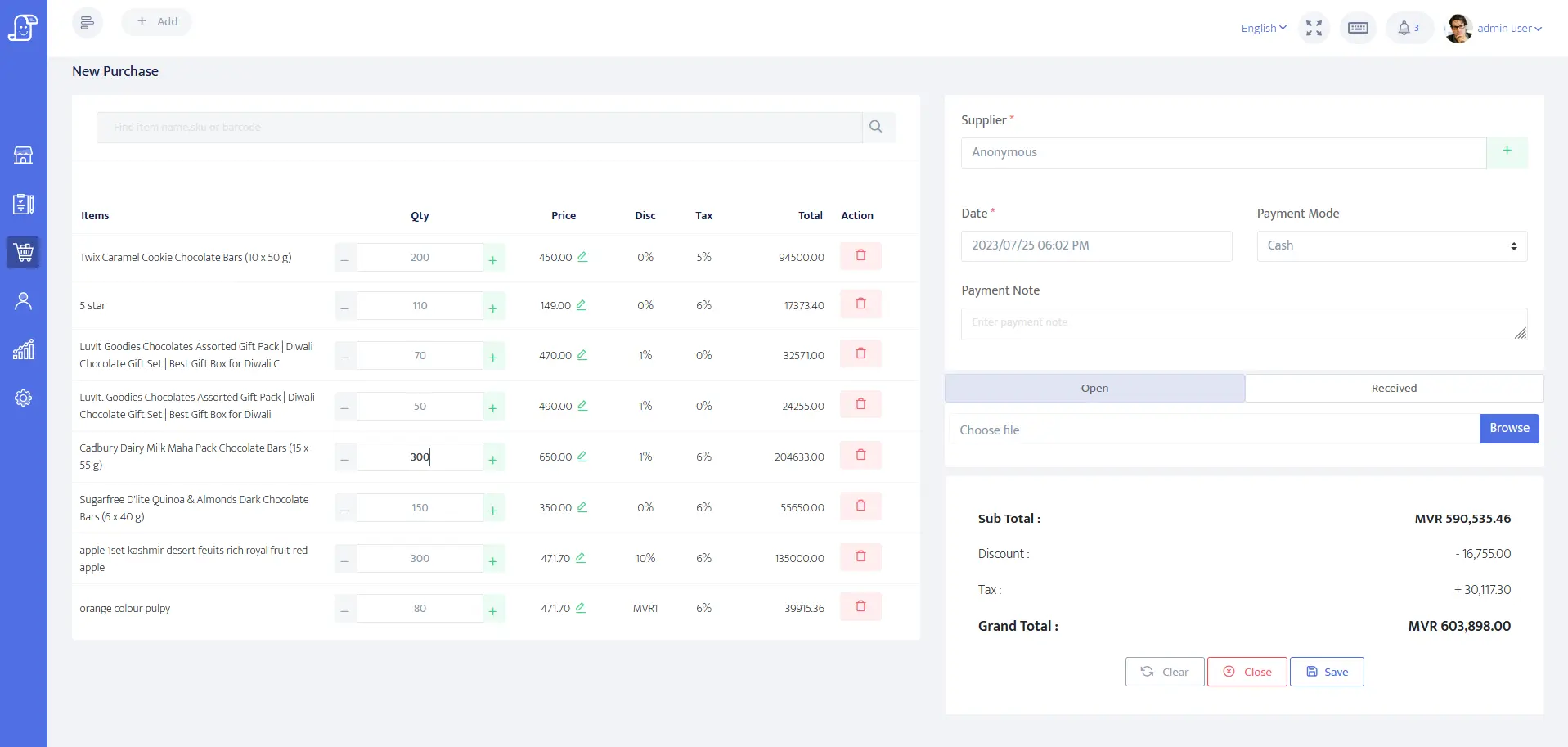
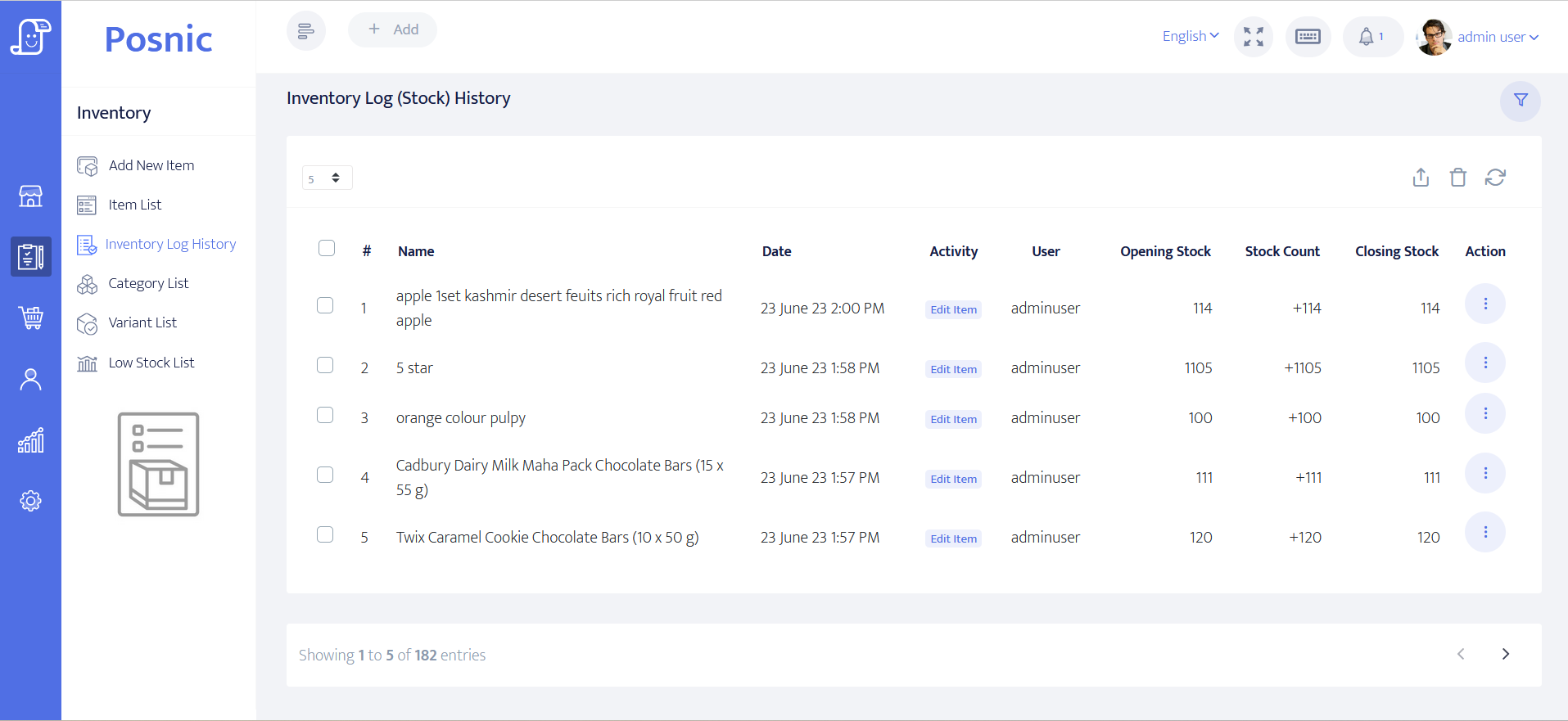
| Purchase receiving | A supplier delivery updates the intended item, unit, quantity, cost and movement history once. | Purchase, receiving, supplier and stock-log paths are documented; no real grocery delivery was reconciled. |
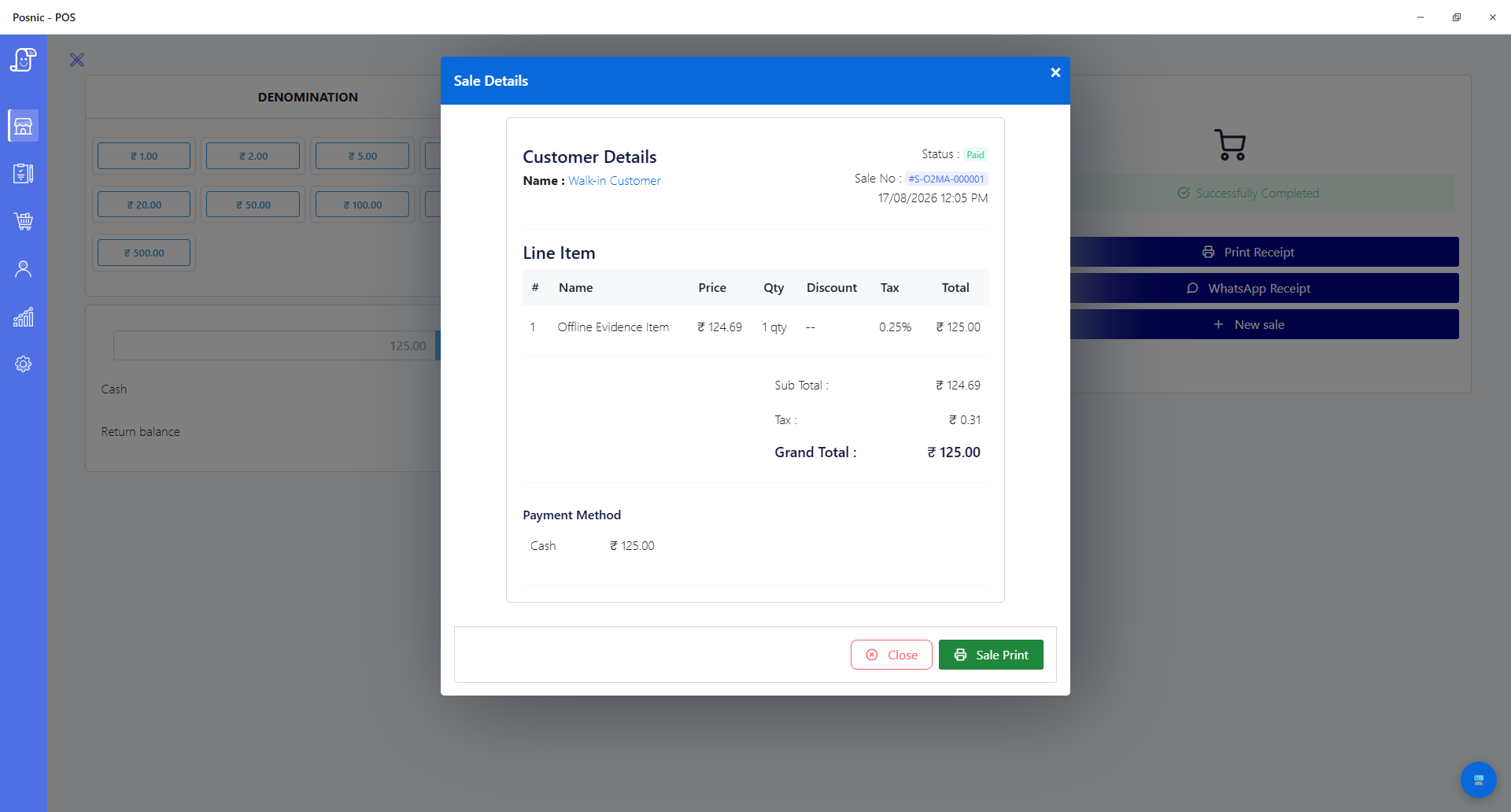
| Sale and return | A mixed basket produces the expected price, discount, tax, receipt, payment and stock reduction, then a controlled return reverses the right records. | One synthetic local cash sale was reproduced. It was not a grocery shift, provider payment or physical receipt run. |
| Tax and receipt | An accountable India tax reviewer maps the shop's registration and supply facts to the current invoice or bill-of-supply particulars. | Posnic fields do not certify GST treatment, HSN usage, invoice wording, numbering, retention or filing for a specific business. |
| Pack declarations and shelf price | The shop checks MRP, quantity, unit price, dates, consumer details and other applicable packaged-goods declarations against current rules. | The reviewed release does not establish automatic legal-metrology, label, batch or expiry compliance. |
| Payments | Cash and every provider tender reconcile to independent settlement evidence, including outage and refund cases. | A recorded payment mode is not an integrated or PCI-validated terminal. Test each provider and device separately. |
| Close and recovery | Sales, returns, cash, provider totals and selected stock reconcile; an off-machine backup restores representative records on a clean setup. | A synthetic restore exists, but no production grocery database, full close or accepted recovery objective was tested. |
What the reviewed Posnic evidence establishes
| Area | Observed evidence | Do not infer |
|---|---|---|
| Stable release | Windows, macOS and Linux assets, source and SHA256SUMS are published under the v1.6.1 release. | A downloaded file is not an installation, accepted till or supported local deployment. |
| Inventory APIs | Seventeen item, inventory, stock-log and receiving-return suites recorded 1,371 passing API unit tests. | Unit tests do not prove a clean catalogue, physical count or complete trading day. |
| Counter source paths | Fifty-seven focused tests covered quick item entry, weighed quantities, report lifecycle, kiosk visibility and sales call paths. | No physical scanner, weighing scale, receipt printer or customer display was connected. |
| Scale parsing | Six source tests covered frames, silence, stability and impossible readings. | Protocol parsing is not exact-device certification or legal-metrology approval. |
| Local transaction | Synthetic sale S-O2MA-000001 for INR 125 was stored and reopened on Windows while external hosts were blocked inside Electron. | This was not an operating-system-wide outage, payment-provider run, power-loss test or shift reconciliation. |
| Known feature limits | The pinned hardware matrix marks label printers and integrated payment terminals as not implemented and requires exact-device testing. | Do not promise shelf-label output, payment integration, universal hardware support or unattended recovery. |
| Acceptance record | The reusable worksheet contains 18 blank controls for catalogue, barcodes, weighing, stock, receipt, payments, closing and restore. | Blank publication fields are not pass results or customer evidence. |
Download and prepare a representative store trial
- Open the official release page first; record the tag, file name, bytes and published checksum before downloading.
- Verify the local SHA-256, preserve the installer warning or trust result, and reject any file that does not match the official release evidence.
- List the shop's real units, common packs, loose goods, tax cases, receipt needs, payment modes, users and required devices before configuration.
- Prepare a representative catalogue with fast movers, similar pack sizes, awkward barcodes, weighed goods, discounts, returns and low-stock thresholds.
- Assign separate business, tax, legal-metrology, payment and recovery owners; software defaults are not approval from those owners.
- Run the sample through purchase receiving, sale, return, stock review, close and clean-device restore before importing the full catalogue.
Ten checks before a grocery or supermarket counter goes live
- Create representative packaged, loose, weighed and non-barcoded items with approved units, prices, taxes and opening stock.
- Scan every required EAN, UPC, DataBar or 2D symbol and record exactly what the application stores, ignores or rejects.
- Test unknown, duplicate, damaged and rapid-repeat barcodes without letting the cashier guess between items.
- Use the exact printer, scanner, drawer, scale, computer, operating system, driver and network planned for the counter.
- Receive a sample supplier purchase and reconcile quantity, cost, tax and stock movement to the expected item.
- Complete cash and provider-tender baskets, a return and an authorized correction, retaining receipts and stock effects.
- Have the responsible reviewer compare printed documents and packaged-goods handling with current local requirements.
- Close the mock day and reconcile sales, discounts, returns, cash, provider totals and a physical count of selected items.
- Disconnect each network dependency, document what continues and stops, then recover without duplicate sales or payments.
- Back up off the till, restore to a disposable clean setup and verify representative items, purchases, sales, returns and reports.
Keep the 18-control supermarket and grocery acceptance record
Record the exact sample, expected result, observed result, evidence reference, accountable owner, legal or payment review, pass/fail decision and follow-up. Leave unresolved controls blank or failed instead of turning publication into a success claim.
Product screens to include in the trial evidence
Questions buyers ask
Is Posnic supermarket and grocery billing software free?
Posnic Community Edition v1.6.1 is published under AGPL-3.0 with official desktop downloads. Hardware, payment processing, configuration, training, support and recovery are separate costs and responsibilities.
Does grocery billing need a separate Posnic edition?
No separate edition is claimed. Grocery, convenience-store and supermarket counters share core item, sale, purchase, return and stock decisions, but the exact units, credit, delivery, tax, hardware and support requirements still need local acceptance.
Is Posnic certified as GST-compliant grocery billing software?
No blanket certification is claimed. The source exposes tax and HSN-related fields, but an accountable reviewer must verify registration, invoice or bill-of-supply particulars, numbering, rates, retention and filing for the specific business.
Can Posnic enforce grocery batch and expiry rules?
This review did not establish an accepted batch or expiry enforcement workflow for a grocery rollout. If those controls are required, keep them outside the system or do not approve rollout until an exact release passes end-to-end acceptance.
Will every barcode scanner and weighing scale work?
No universal hardware claim is made. Keyboard-wedge scanner input and scale protocol code are documented, but the exact symbol, device, interface, driver, operating system and fallback flow must be tested physically.
Does offline billing mean every feature and payment works without internet?
No. One local sale was reproduced while external hosts were blocked inside Electron. Provider payments, remote services, updates and network devices can still depend on connectivity and require separate outage tests.
Should I download cracked grocery billing software?
No. Use the official tagged release, compare its SHA-256 with the published checksum and retain the result. A crack removes the trustworthy release path and can put billing data and the counter computer at risk.
What should a small grocery shop test first?
Start with representative items, barcode and weighed-goods input, one supplier receipt, cash and provider-tender sales, a return, stock review, day close and a clean-device restore using the exact planned hardware.
Primary sources used
Posnic v1.6.1 release
The tagged stable release, source, desktop assets and published SHA256SUMS used by this page.
Posnic user guide
Pinned product documentation for item, sale, purchase, return, inventory, low-stock, report and backup paths.
Posnic hardware matrix
Pinned support boundaries for scanner, printer, drawer, scale, label-printer and integrated-terminal claims.
GNU AGPL version 3
The official license text governing the Community Edition source and distribution terms.
GS1 EAN and UPC barcodes
Primary retail barcode guidance for the EAN/UPC family used to identify consumer products at point of sale.
GS1 2D retail POS guideline
Primary guidance distinguishing symbol decoding, GTIN lookup, Application Identifier processing, host changes and in-store testing.
CBIC tax invoice rules
Official India-specific invoice and bill-of-supply particulars. Applicability and current treatment require qualified review.
India packaged-commodities rules index
The Department of Consumer Affairs index for the Legal Metrology Packaged Commodities Rules and amendments. The business must identify the current provisions that apply.
PCI merchant resources
Primary payment-security guidance for merchant responsibilities, terminal scope and provider questions.
NIST contingency planning
Primary recovery-planning guidance used to structure dependency, backup, restore and exercise decisions; it is not presented as an India retail law.